
Drainage guide
Soakaways: the rules, costs and when they fail
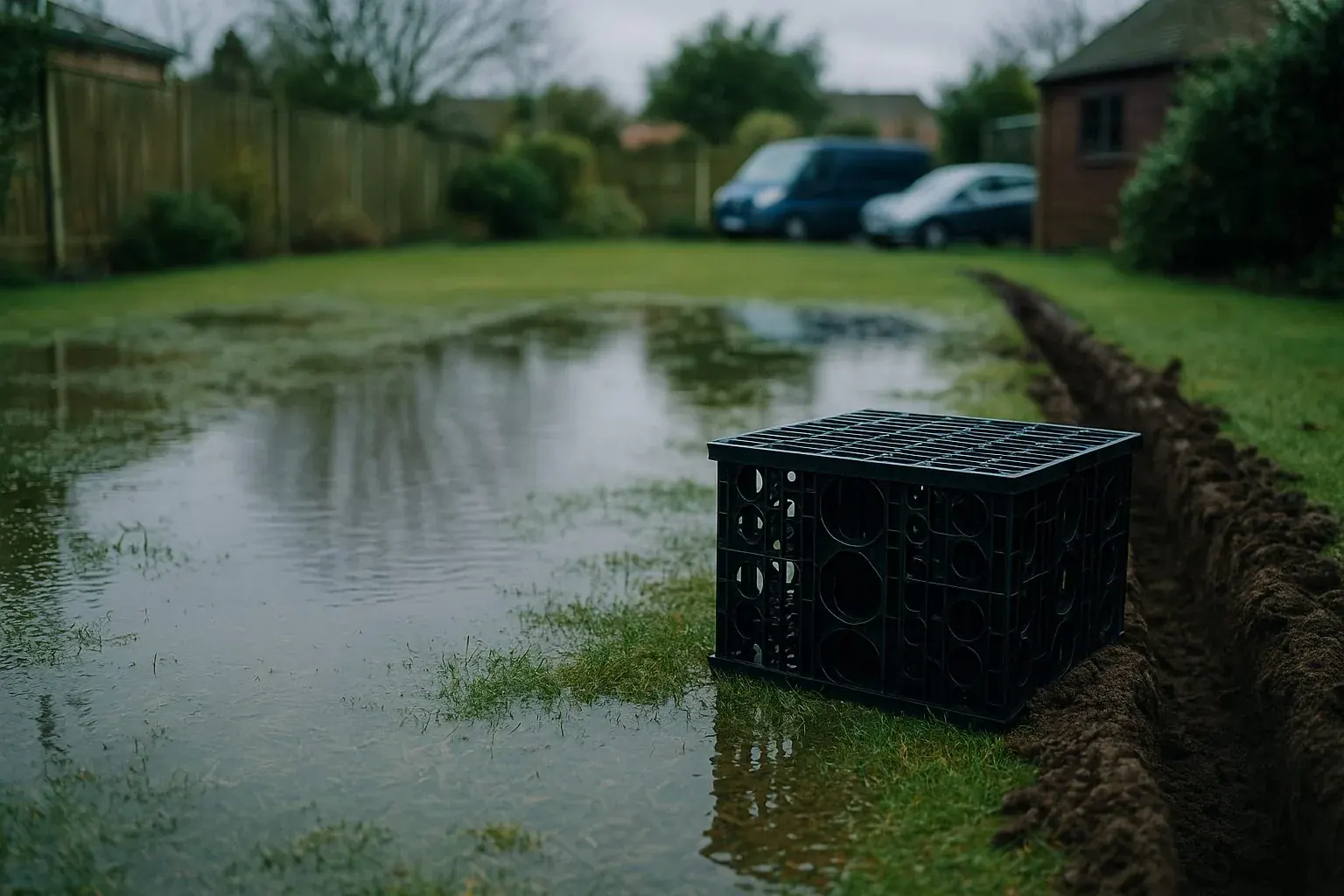
A domestic soakaway typically costs around £850, rising to £2,500+ in clay ground (MyJobQuote / Checkatrade, 2026). Building Regs require surface water to drain to a soakaway first where ground conditions allow, sized using a BRE Digest 365 percolation test, and sited a safe distance from buildings.
Typical cost: around £850 for a domestic soakaway; £2,500–£5,000 in clay ground. Percolation test £180–£300.
How does a soakaway work?
A soakaway is a pit or crate system that collects rainwater from roofs and hard surfaces and lets it disperse slowly into the surrounding ground, away from the building. When it silts up or was undersized, water backs up and floods lawns, drives or the house.
What do Building Regs and the percolation test require?
Building Regs Part H requires surface water to drain to a soakaway first where ground conditions allow, before a watercourse or sewer. A BRE Digest 365 percolation test (£180–£300) determines whether the ground can take one and how large it must be.
Soakaways are usually suitable for areas under 100m² and must be sited a safe distance from buildings so they do not undermine foundations.
Why are clay soils a problem?
Clay drains slowly, so a soakaway in clay must be much larger — or may not be viable at all, in which case an attenuation system or watercourse connection is used instead. Costs in clay ground rise to £2,500–£5,000 (BookaBuilderUK, 2026).
What are the signs of a failed soakaway?
Standing water after rain, ground that stays waterlogged, gullies backing up, or damp appearing at the base of walls all point to a soakaway that has silted up or was never sized correctly.
How much does a soakaway cost by ground type?
Costs vary widely by source and ground — from around £660 for a small system to £2,500+ in clay (MyJobQuote / Checkatrade, 2026). Because estimates differ by up to five times, always compare quotes against a percolation test rather than a single “average”.
UK drainage in numbers
The scale of the problem
Sources: Water UK, Ofwat and the ABI (2024–2025). Figures are UK-wide and rounded.
Get soakaway quotes
Get quotes from specialists who design and install soakaways to Building Regs, starting with a percolation test.
Get soakaway quotes